
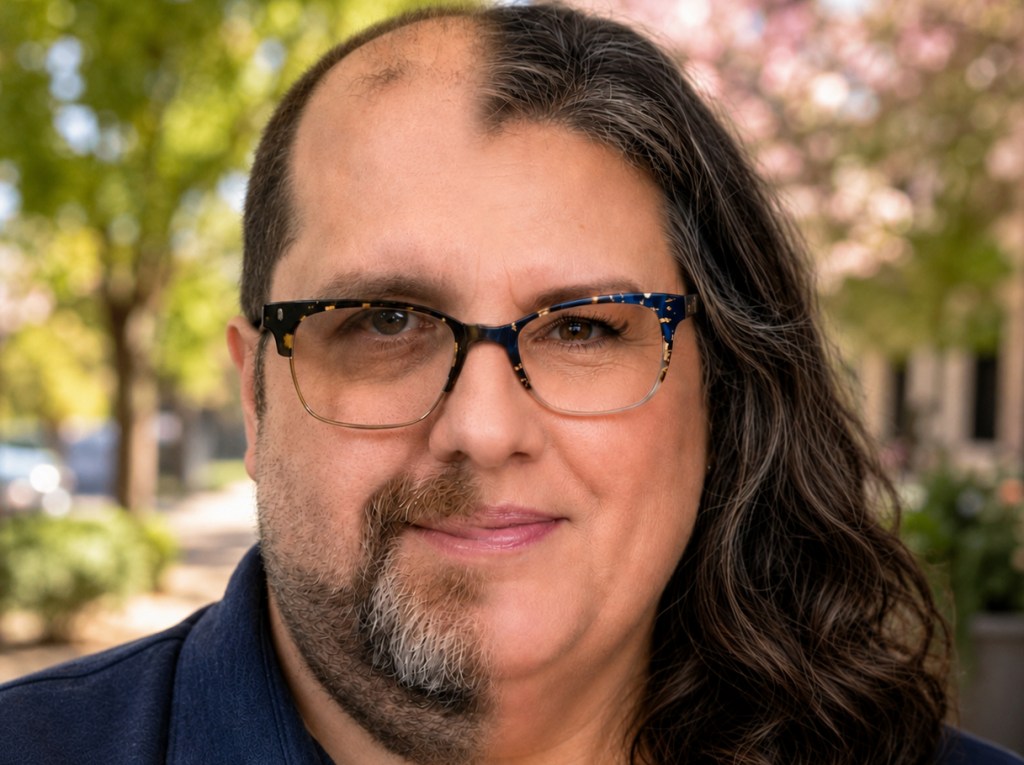
For years, I avoided the word dysphoria.
It wasn’t because I didn’t have feelings I struggled to explain. It was because the examples I’d always seen didn’t look like my experience. When I heard people talk about dysphoria, they often described certainty, intensity, or a specific kind of pain that didn’t match what I was living with.
What I had was a collection of conflicting feelings.
Some days I felt completely comfortable with myself. Other days I found myself drawn toward a different expression of who I was. Sometimes those feelings were strong. Sometimes they were barely noticeable. There wasn’t a neat narrative. There wasn’t a clear destination. There was just a persistent set of thoughts and feelings that seemed connected somehow, even when I couldn’t explain how.
For a long time, I didn’t talk about them much.
Part of that was fear. Part of it was confusion. But a big part of it was that I genuinely didn’t think I had the right words.
When people don’t have language for an experience, they often end up filing it away under “I’ll deal with that later.” That’s what I did. Not the dealing-with-it-later part. Mostly the filing-it-away part.
The feelings never disappeared, but I became very good at setting them aside, minimizing them, or convincing myself they weren’t important enough to examine too closely. Up until recently, words relating to my gender identity were never spoken out loud. They lived in quiet places in my head, buried amongst other feelings I dared not speak about. I got really good at suppressing feelings, but in the end they just kept coming back.
Not dramatically. Not in a way that demanded immediate action. Just consistently enough that eventually I had to admit they weren’t going anywhere.
For years, I resisted the word dysphoria because I thought I understood what it meant. The examples I’d seen always seemed to describe a conflict between two identities: who someone was and the identity they were being forced to live as. There was a clear tension, a clear direction, and often a clear destination, and while that accurately describes what I saw, my experience never felt like that.
What I struggled with wasn’t the feeling that one version of myself was intruding on another. It wasn’t a battle between an authentic self and a false one.
If anything, the challenge was the opposite.
The feelings I carried seemed to come from parts of myself that all felt genuine. The tension wasn’t between two competing identities. It was trying to understand how multiple truths about myself could exist at the same time.
It felt like trying to force heads and tails to exist on the same side of the coin.
I knew the contradiction was there. I also knew there was something I wasn’t fully understanding and I had no idea how to reconcile it. I treated dysphoria like a diagnosis I had to qualify for rather than a concept that might help me understand myself.
Looking back, I don’t think this was entirely about dysphoria. Let me explain.
I’ve spent much of my life standing just outside labels that seemed like they should fit.
Sometimes it was because my understanding of the label didn’t leave room for me. Other times it was because the way other people talked about it didn’t leave room for me.
One phrase I’ve used before is that I never felt “LGBT enough.”
Looking back, I realize that feeling had less to do with being LGBT and more to do with belonging.
As a bisexual man whose relationship history was exclusively with women, I often felt like an outsider looking in. I understood why the label fit me, but I wasn’t always sure other people would agree. There always seemed to be an unspoken expectation that a label had to be proven. That your experiences had to look a certain way before you were allowed to claim it.
Over time, I internalized that idea.
I wasn’t just asking whether a label described my experience. I was asking whether my experience was allowed to belong within the definition. In hindsight, that’s exactly what I was doing with dysphoria. I wasn’t evaluating the reality of my own feelings. I was comparing them against a standard that had never really left room for me in the first place.
At some point, I stopped asking whether my experience met an imaginary standard and started asking a different question:
Is this a useful way to understand what I’m feeling?
That shift changed everything.
The most important realization wasn’t that I’d discovered something new about myself. The feelings were already there.
The shift was realizing that I was allowed to use the language that made sense to me.
Maybe my understanding of dysphoria isn’t exactly the same as someone else’s. Maybe another person would describe their experience very differently. But once I allowed myself to call it dysphoria, something interesting happened.
The conflicting feelings stopped feeling disconnected.
Instead of ten unrelated thoughts competing for attention, I could start to see a pattern and, finally, the situation felt less confusing. The biggest surprise was that accepting the word didn’t create panic. It actually reduced it.
For years, I worried that acknowledging these feelings would force me toward a conclusion. I thought that once I allowed myself to use the word, I would immediately be expected to have answers.
Instead, the opposite happened. The pressure disappeared, and I could finally stop arguing with myself about whether the feelings were real and start exploring what they actually meant.
That process became even easier because I wasn’t doing it alone.
Having people in my life who accepted the questions before I had the answers made a tremendous difference. There’s something incredibly comforting about knowing that the people who care about you aren’t going to panic just because you’re trying to better understand yourself.
People like my wonderful wife, Kathy, who has stood by me through every struggle I’ve experienced as these feelings have gone from inside my head to out in the open.
People like my best man, Al, whose only question when he learned about Jackie and the entire story of how I arrived here was “What should I call you now? I don’t wanna eff this up.”
People like my friend Krystle who sat with me, in the middle of a work day, as I poured my soul out to her and who did nothing but listen and smile and hug me when it was over and tell me how proud she was of me.
Acceptance doesn’t magically solve uncertainty, but in my case, it did remove fear from the equation. And when fear isn’t driving the conversation, it becomes much easier to listen to yourself honestly.
These days, the dysphoria itself doesn’t feel like the struggle.
The larger challenge is understanding how what I’ve learned fits into my broader understanding of who I am.
When you’ve spent years building an idea of yourself, it can be unsettling to discover new information that doesn’t neatly fit into that picture. You start reexamining assumptions. You revisit old conclusions. You wonder whether certain things are more flexible than you once believed.
Those questions can be uncomfortable.
They can also be incredibly valuable.
Today, I don’t feel like I’m at the end of a journey. I don’t even feel like I have all the answers. There are still parts of myself I’m trying to understand. There are still questions that pull me in different directions.
But today, those questions feel less like a conflict and more like a conversation.
For years, I thought I had to choose which side of the coin was the real one.
Now I’m starting to wonder if the point was never choosing a side at all.
Maybe the point was simply learning to understand the coin.
There’s a huge difference between struggling with something and trying to understand it.
I spent a long time doing the first.
I’m finally learning how to do the second.

 No More Closets
Leave a comment